
You will not be allowed to compare more than 4 products at a time
View compareSeaside Beach Toy Set (Wheat Husk)
Seaside Beach Toy Set (Wheat Husk)
Little Papayas | Ages 2 - 5
Out of stock


Ships within 1-2 Business Days
Free Shipping
Cash on Delivery Available
Easy Returns
Description
What's Included
What your Child Learns
Why This Matters
Shipping and Return
Description
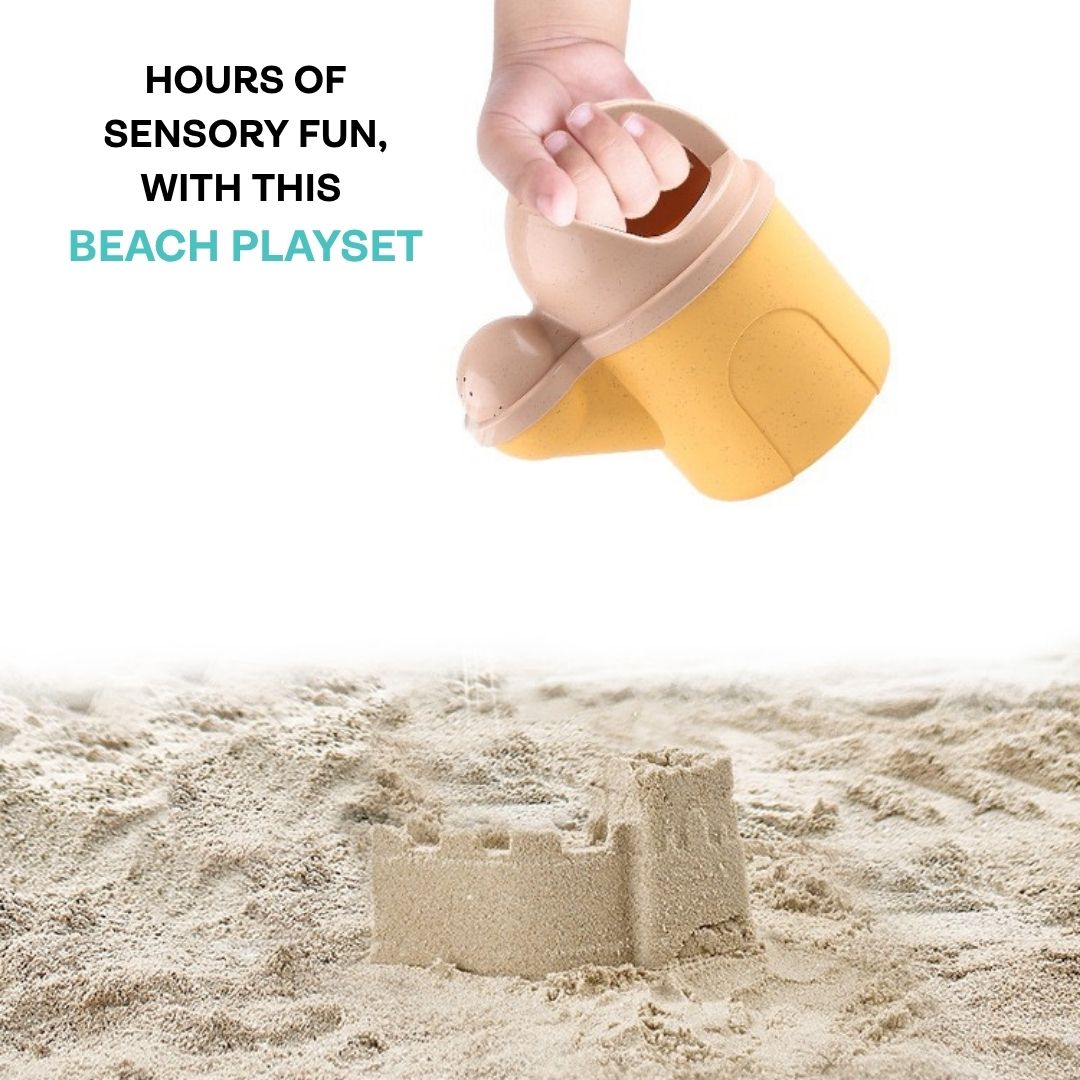
Bring fun and discovery to beach days with Star Papaya Wheat Husk Seaside Beach Toy Set. Thoughtfully designed for little hands, this versatile set encourages children to scoop, pour, mould, and build - turning sand and water play into a rich sensory and imaginative experience. Not going to the beach? This set makes for a fun afternoon of sensory play in the balcony or garden, just needs water!
Sensory Exploration: Sand and water provide engaging tactile experiences that support sensory processing and exploration.
Builds Hand-Eye Coordination:Β Pouring, scooping, and shaping help refine coordination, control, and fine motor skills.
Introduces Early STEM Concepts:Β Children naturally explore ideas like volume, gravity, and cause-and-effect through hands-on play.
Encourages Creative Play:Β Open-ended tools invite imaginative building, storytelling, and endless possibilities.
Recommended Age: 2 β 7 Years
Perfect Gift Idea: A wonderful choice for birthdays, return gifts, pretend play corners, beach days, and sensory setups. Fun, eco-conscious, and endlessly engaging, this seaside play set delivers hours of imaginative, hands-on play for little explorers and builders.
What's Included
A 7-piece set including:
β’ 1 Bucket with lid
β’ 1 Watering can
β’ 2 Scoops/Shovels
β’ 2 Sand Moulds
β’ 1 Sieve
What your Child Learns
Sensory Exploration & Regulation - Sand and water are some of the most engaging natural materials for young children. As they dig, sift, and pour, they experience:
- Different textures and resistance
- Temperature and movement
- Cause-and-effect through touch
This kind of sensory play supports:
- Body awareness
- Calm, focused engagement
- Self-regulation
Younger children explore through touch and repetition. Older children begin experimenting more intentionallyβmixing, shaping, and observing changes.
Fine Motor Skills & Coordination Every actionβscooping, pouring, transferringβbuilds:
- Handβeye coordination
- Grip strength and control
- Bilateral coordination (using both hands together)
These are the same foundational skills needed later for:
- Writing
- Dressing
- Everyday independence
Early STEM Thinking - Without any formal teaching, children begin to explore:
- Volume and measurement (βWhich holds more?β)
- Gravity and flow (pouring water or sand)
- Cause and effect (βWhat happens if I tilt this?β)
They test ideas, adjust, and try againβbuilding early problem-solving skills through play.
Imaginative & Open-Ended Play - With no fixed outcome, children create their own play scenarios:
- Building sand structures
- Pretend cooking or serving
- Creating small βworldsβ
Open-ended play encourages:
- Creativity
- Flexible thinking
- Independent exploration
Ages 2β3: Scooping, pouring, simple sensory exploration
Ages 4β5: Building, experimenting, early pretend play
Ages 6+: Creating more complex structures, collaborative play, and storytelling
Because the set is versatile and open-ended, children return to it in new ways as they grow.
Why This Matters
πΏ Why this matters for parents
As parents today, weβre often balancing busy routines, screen exposure, and the pressure to constantly βentertain.β But some of the most meaningful learning happens in the simplest moments, when children are free to explore at their own pace.
π± Sensory Play Supports Whole-Child Development: Hands-on play with natural materials like sand and water engages multiple senses at once. This strengthens neural connections and supports cognitive, physical, and emotional development.
π€ Calm, Focused Play in a Fast-Paced World: Unlike fast, overstimulating toys, open-ended outdoor play allows children to slow down. Repetitive actions like pouring and digging can be deeply calming and help children stay engaged for longer periods.
βChildren learn best when they are free to explore at their own pace.β β National Institute for Play
π΅ Screen-Free Learning That Feels Natural: Research consistently shows that real-world, hands-on play supports stronger learning than passive screen time. Activities like scooping, building, and experimenting develop:
- Problem-solving skills
- Attention span
- Real-world understanding
The American Academy of Pediatrics recommends active, screen-free play as essential in early childhood.
π§ Learning Through Exploration, Not Instruction: Toys that do everything for a child often limit engagement. In contrast, simple tools invite children to:
- Ask their own questions
- Test their own ideas
- Discover outcomes independently
βPlay gives children a chance to practice what they are learning.β β David Elkind
π Open-Ended Play Builds Confidence: When thereβs no βright wayβ to play, children feel more confident trying, failing, and trying again. This builds:
- Resilience
- Independence
- A sense of capability
π What this means for your family: Choosing simple, open-ended play isnβt about doing lessβitβs about creating space for children to do more. More exploring. More thinking. More discovering.
Shipping and Return
π Standard Shipping (Free)
Ships in 1β2 business days
Delivery:
Metro cities: 3β5 days
Rest of India: 3β7 days
β‘ Priority Shipping (βΉ400)
Packed & shipped first (within 1 business day)
Faster delivery where available
π Same-Day Delivery β Hyderabad (βΉ400)
Delivered same day for orders placed before 4pm
Select at checkout
π Returns & Refunds
We accept returns or refunds only in case of damaged, defective, or incorrect items received.
Please contact us within 7 days of delivery and we'll take care of it π