
You will not be allowed to compare more than 4 products at a time
View compareShould I Share My Ice Cream?
Should I Share My Ice Cream?
StoryBox | Ages 2 - 8
Hurry! Only left 7 in stock
Share
Couldn't load pickup availability
Ships within 1 Business Day | Delivered in 3–5 Days
Free Shipping
Cash on Delivery Available
Easy Returns
Description
What's Included
What your Child Learns
Why This Matters
Shipping
Description
The Star Papaya StoryBox is an imaginative play set designed to bring your child's favourite stories to life. The StoryBox includes a story book, story characters and props, and sensory material.
Through the The Should I Share my Ice-cream StoryBox, your child will join Gerald the Elephant as he faces a big (and very relatable!) decision — to share or not to share. With adorable hand puppets of Gerald and Piggie and a pretend ice-cream set, this StoryBox brings Mo Willems’ charming story to life while encouraging conversations around kindness and friendship.
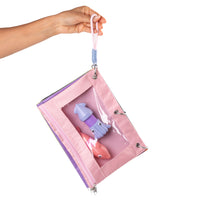
The Story Characters come in a carry-around pouch for your little one to play anywhere they like. The Story Set can be re-used and re-played.
What's Included
- Should I Share My Ice Cream? book by Mo Willems
- Hand puppets of the Elephant and Piggie
- Ice cream-making toy set made from eco-friendly material
- Colourful pom poms for pretend sprinkles
What your Child Learns
Inspired by the fun story Should I Share My Ice Cream? by Mo Willems, this StoryBox turns a simple question into a powerful learning moment.
When children step into Gerald’s shoes (or rather, trunk!) and act out his dilemma, they aren’t just pretending — they’re exploring big emotions, social choices, and the meaning of friendship.
Social & Emotional Development - This story gently introduces one of childhood’s biggest lessons: sharing. Through puppet play and role-reversal, children practice:
- Empathy and perspective-taking
- Understanding fairness and kindness
- Emotional regulation (waiting, disappointment, joy)
- Friendship and cooperation
Younger children begin recognizing emotions.
Older children start discussing why sharing feels hard — and why it matters.
Decision-Making & Critical Thinking - Gerald’s internal debate helps children explore:
- Cause and effect (“What happens if I don’t share?”)
- Problem-solving
- Delayed gratification
- Moral reasoning in age-appropriate ways
- Acting out different endings encourages flexible thinking and reflection.
Language & Communication Skills - Using hand puppets naturally builds:
- Expressive language
- Conversational turn-taking
- Story sequencing
- Confidence in speaking
Children often begin by repeating lines from the book — then move on to creating entirely new dialogue between Elephant and Piggie. Puppet play makes communication playful and low-pressure.
Fine Motor & Sensory Development - Scooping pretend ice cream, adding pom pom “sprinkles,” and manipulating puppets strengthens:
- Hand–eye coordination
- Fine motor precision
- Bilateral coordination
- Sensory exploration
- Hands-on play deepens focus and engagement.
A Story That Grows With Your Child
Ages 2–3: Simple role-play, naming emotions, serving pretend ice cream
Ages 4–5: Retelling the story and practicing turn-taking
Ages 6–8: Creating new dilemmas, leading puppet shows, discussing fairness and friendship
Because the set is open-ended and replayable, children revisit the story at new emotional and developmental stages.
Why This Matters
Why This Matters for Parents
As caregivers today, we want playtime to be fun and meaningful. With screens competing for attention, busy schedules, and toys that do all the “thinking,” it’s more important than ever to choose play experiences that truly support a child’s growth.
Non-Overstimulating Play: Why Less Is More
Overstimulating toys and screens can overwhelm young brains. Research shows that simple, child-directed play encourages deeper engagement and stronger focus, because children are not reacting to lights and sounds — they are creating the play.
“Children learn best when they are free to explore at their own pace.” — National Institute for Play
Screen-Free Development: What Research Shows
Hands-on play supports richer learning than passive screen time. The American Academy of Pediatrics recommends screen-free, real-world play in early childhood because it builds language, social interaction, problem-solving, and emotional regulation.
Storytelling & Language Skills: The Connection
Storytelling isn’t just fun - it’s foundational for language development. When children act out a narrative, they expand vocabulary, sequence events, and practice expressive speech. Studies show that shared story play significantly builds communication and literacy readiness.
“Play gives children a chance to practice what they are learning.” — David Elkind, Child Development Expert
Open-Ended Play vs. Prescribed Toys
Toys with one “right” way to play limit imagination. Open-ended materials like StoryBox sets invite creativity, flexible thinking, and problem-solving - traits children need both for school and life.
“Open-ended play helps children make choices, plan ahead, and think creatively.” — Harvard Medical School
What This Means for Your Family
Choosing play that is unstructured, screen-light, and imaginative isn’t just a parenting preference — it’s backed by research. Join us in bringing home imaginative and independent play for the entire family!
Shipping
Ships within 1 business day | Delivered in 3–5 days 🚚✨
Need it faster? Choose Express Delivery (1–2 business days) for just ₹400.
If you’re in Hyderabad, we also offer same-day delivery for orders placed before 4pm, at the same cost as express delivery. Contact us at +91 70758 79620.
Free returns/exchanges in case of any incorrect or defective items. Just contact us within 7 days of delivery — we’ll take care of the rest! 💛

